A new vinyl liner should sit flat against the wall and floor with no ripples and no water getting behind it. When wrinkles show up or the liner lifts off the floor, the cause is usually the fit, the fill, or water pressure from behind the shell rather than the vinyl itself. Figuring out which one you are looking at tells you whether this is a quick reset or a drainage problem that will keep coming back.
What a Wrinkle Is Telling You
Wrinkles fall into two groups, and the difference matters. Fitting wrinkles were there from day one. They happen when the liner was not pulled tight and seated against the walls and floor before water went in. Once the pool is full, the weight of the water presses the liner against the shell and those wrinkles are locked in place. They rarely relax on their own.
Later wrinkles point somewhere else. A liner that was smooth in spring and rippled by late summer is usually reacting to movement underneath it, not to the sheet of vinyl. Walk the pool on a sunny day and note where the ripples sit. Corners and wall runs suggest fit. Broad ripples across the floor, especially in one area, suggest water or soil movement below.
Why a Liner Floats
A floating liner is a liner lifted off the floor or wall by water pushing from behind it. The vinyl is not the problem. Groundwater, a rising water table, a leaking irrigation line, or grading that sends stormwater toward the pool all raise pressure under the shell. When that pressure is greater than the weight holding the liner down, the liner floats.
- Groundwater rising after a heavy rain or a wet winter
- A high water table in spring
- Poor drainage around the pool deck
- A cracked or blocked pool plumbing line leaking under the shell
- A downspout or irrigation line discharging close to the pool
Filling the pool back up without dealing with the water source is a temporary measure. The pressure builds again the next time the ground saturates.
Why Davidson County Soil Makes This Worse
Davidson County soil is clay-heavy. Clay drains slowly, which means water sits against the pool shell instead of moving away. Clay also shrinks and swells as it wets and dries, and that movement shifts soil around pipes, walls and the floor over the years. It is one reason a liner that fit well for a decade can start showing ripples after a wet season.
If the pool sits in a low spot, or a downspout dumps close to the deck, water has nowhere to go but down and against the shell. Expansive soils are a known cause of damage to pool walls, floors and plumbing, so a wrinkle complaint is sometimes a drainage complaint.
What the Symptom Points To
| What you see | Likely cause | What to check |
|---|---|---|
| Corners and wall wrinkles | Liner not seated before fill | Was the liner vacuumed and water added slowly? |
| Broad floor wrinkles | Water or soil pressure | Drainage, water table, plumbing leaks |
| Liner lifted off the floor | Groundwater behind the liner | Grading, downspouts, irrigation outlets |
| Ripples after a wet season | Clay soil movement | Whether a dewatering sump is needed |
| Ripples near a fitting | Fit around the cut-out | Gaskets, faceplates, return and skimmer seals |
What to Check Before Anything Is Taken Apart
- When exactly did the wrinkles appear relative to the fill, and did they get worse over time?
- Where do downspouts and irrigation lines discharge?
- How does water sit on the deck after a heavy rain?
- Does the pool have a hydrostatic relief valve or a dewatering sump?
- Was the liner set with a vacuum, and was water added slowly?
- Has the pool lost water over a season without an obvious cause?
The Fixes, From Simple to Structural
Some fitting wrinkles can be worked out later, but it takes a partial drain and a careful reset, and it will not hold if the real cause is below the liner. A floating liner gets reset only after the water source is controlled. That can mean regrading around the deck, extending downspouts, adding a dewatering sump, or repairing a leaking line.
Drainage corrections and floor work carry their own cost. Floor patching or vermiculite repair runs $150 to $3,000 depending on how much of the base is affected, and hidden repairs found after drain-down can add $400 to $2,000 to a project that started as a simple liner swap.
Workmanship or Product?
If wrinkles were visible the day the pool was filled, that points to how the liner was fitted and seated, not to the sheet of vinyl. Manufacturer warranties are pro-rated limited warranties and they exclude installation labour, while installer workmanship cover is typically 1 to 3 years. Ask what each side actually covers before you agree on a fix.
Frequently asked questions
Can wrinkles be fixed without replacing the liner?
Sometimes. A limited set of fitting wrinkles can be worked out by partially draining the pool and resetting the liner. If the cause is groundwater, soil movement or a floor problem, resetting alone will not hold and the wrinkles come back.
Why would a brand new liner float?
Because water is pushing it up from behind. Groundwater pressure, a saturated clay soil profile, or a leaking line under the shell can lift a liner regardless of how well it was installed. The fix is controlling the water, not replacing the vinyl.
Does a floating liner mean the liner is defective?
Usually not. A liner floats because of pressure behind it, which is a site and drainage issue. A defect claim would look at the vinyl itself, and manufacturer warranties are pro-rated limited warranties focused on the sheet, not on what is under it.
How do I keep the problem from returning?
Handle the water first. Look at grading, downspout discharge, irrigation lines and whether the pool needs a sump or relief valve. On Davidson County clay that drainage work is often the difference between a liner that stays put and one that ripples again after the next wet season.
Sources
- Building a pool in Nashville and Davidson County (clay soil)
- Expansive soils and inground pools
- Angi pool liner cost 2026
Related
Pool liner services in Nashville
Pool Liner Replacement
A vinyl liner is the waterproof skin of the pool, and Nashville pools replace one every 5 to 15 years.
Vinyl Pool Liner
Almost every inground pool without a concrete or fibreglass finish is a vinyl-liner pool, and the liner is a consumable.
Inground Pool Liner
An inground liner is fabricated to your pool, not pulled off a shelf, so measurement quality decides the result.
Above Ground Pool Liner
Above-ground liners are the cheapest job in this niche and the one homeowners most often try themselves.
Pool Liner Repair
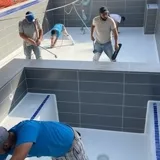
Not every liner problem needs a new liner, but the ones that cannot be repaired are usually the ones that get patched too long.
Pool Wall And Floor Repair
A new liner over a failing shell is money spent twice.
Areas we serve
Nashville
Pool liner replacement in Nashville, TN - costs, water and soil notes.
Franklin
Pool liner replacement in Franklin, TN - costs, water and soil notes.
Brentwood
Pool liner replacement in Brentwood, TN - costs, water and soil notes.
Murfreesboro
Pool liner replacement in Murfreesboro, TN - costs, water and soil notes.
Hendersonville
Pool liner replacement in Hendersonville, TN - costs, water and soil notes.
Gallatin
Pool liner replacement in Gallatin, TN - costs, water and soil notes.
Smyrna
Pool liner replacement in Smyrna, TN - costs, water and soil notes.
Mount Juliet
Pool liner replacement in Mount Juliet, TN - costs, water and soil notes.